From Design Through Owner Training
By Gus Strats – Summit Anchor Company, Inc. September 15th, 2026
Fall Protection at Washington Dulles International Airport
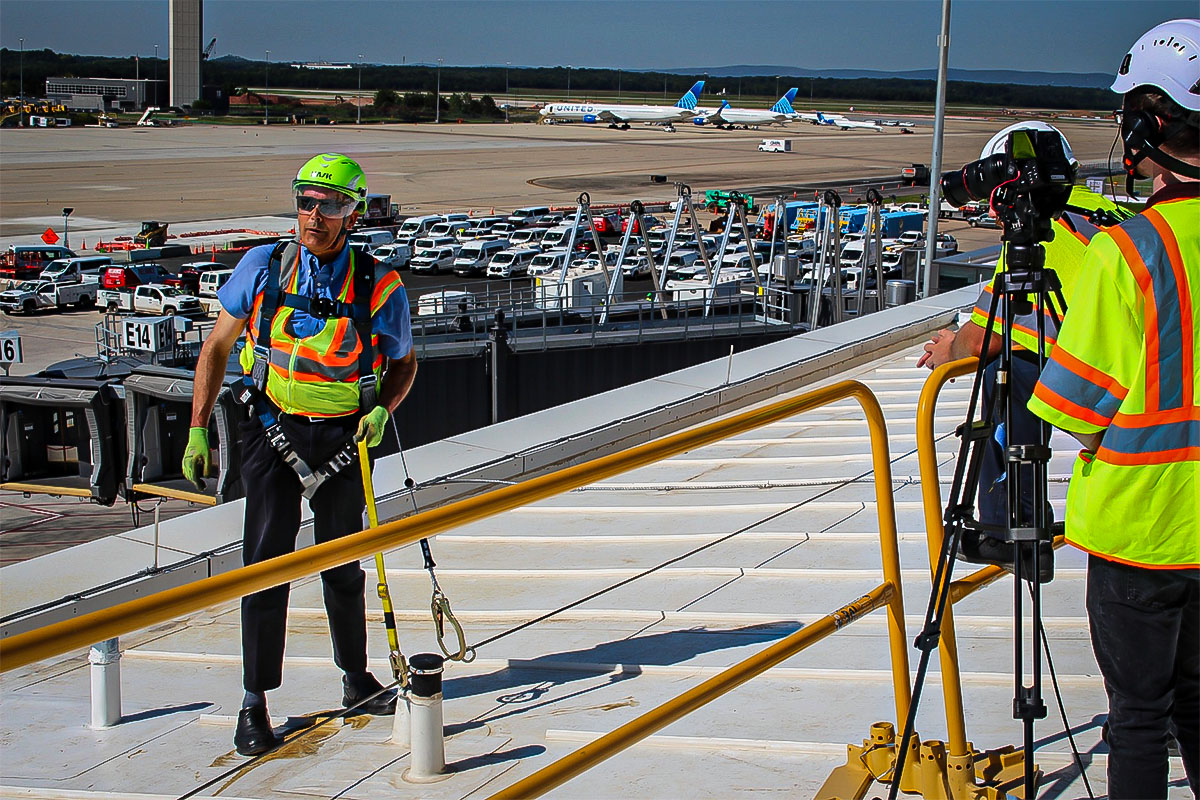
For Summit Anchor Company, installation is not the end of the process. A fall-protection system also has to be understood by the people who will ultimately use and maintain it.
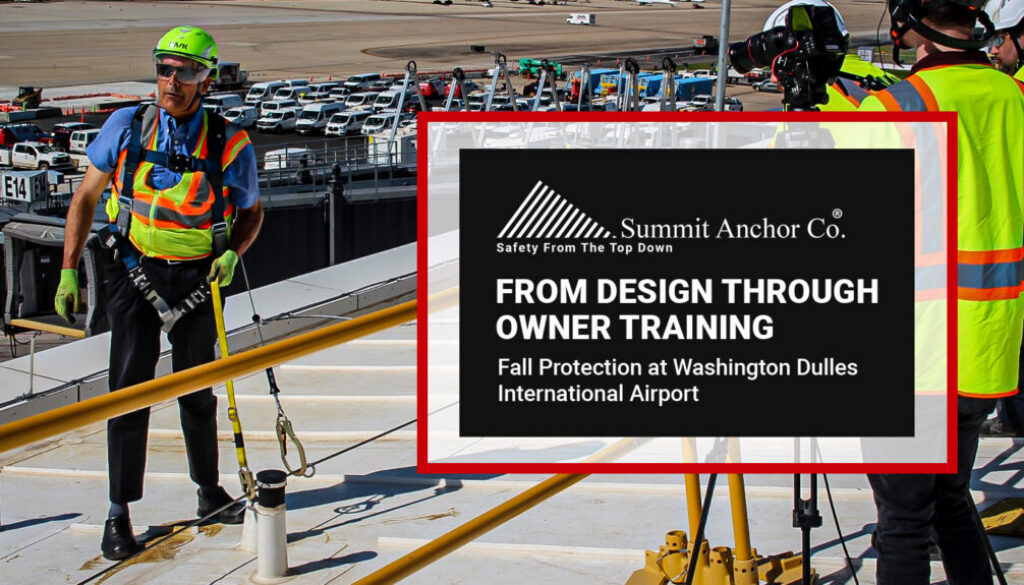
Summit Anchor Company recently completed system-specific owner training for maintenance personnel at Washington Dulles International Airport as part of our fall-protection scope for the Tier 2 East project.
Summit’s involvement extended well beyond equipment fabrication and installation. Our scope included engineering and design coordination, fabrication, onsite welding of fall-protection anchors, horizontal lifeline installation, testing and certification, as-built documentation, and system-specific owner training.
From the Classroom to the Installed System
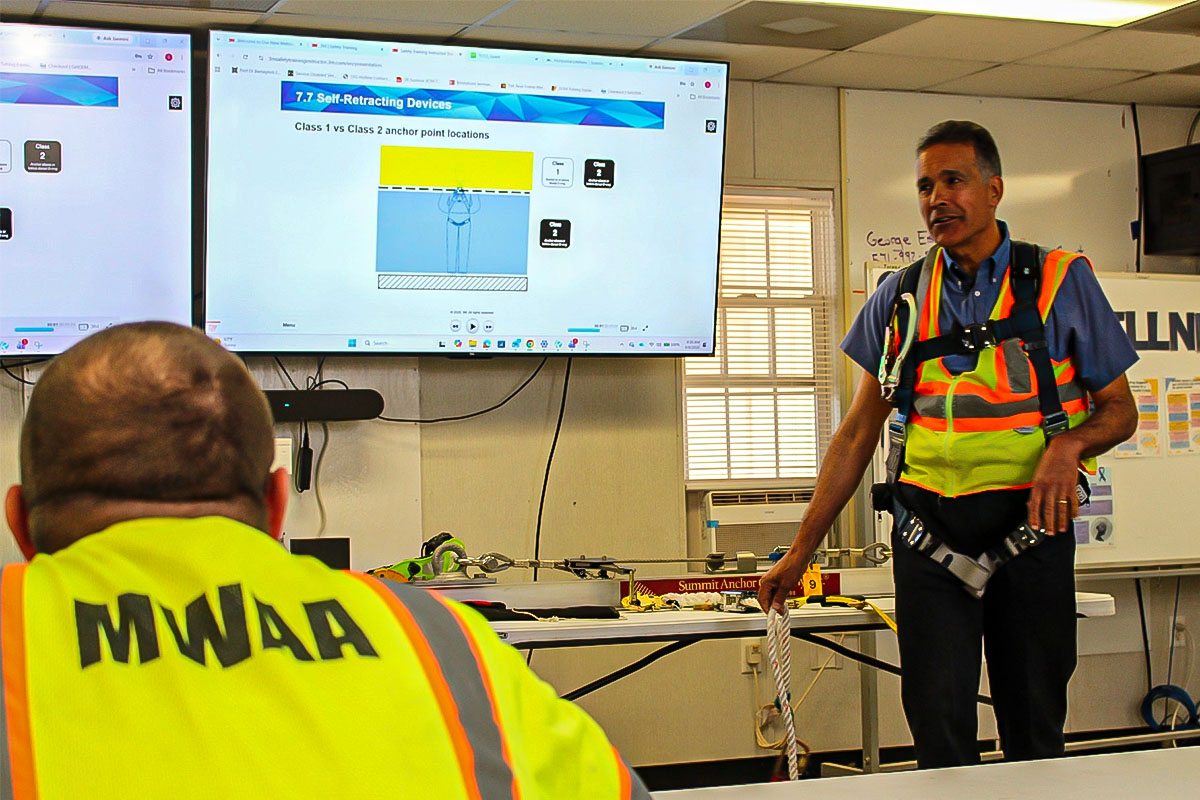
The training began with classroom instruction covering fall-protection fundamentals and the principles necessary to understand the proper use and limitations of the installed systems.
Topics included fall dynamics, free-fall distance, fall-clearance requirements, energy absorption, self-retracting devices, personal fall-arrest equipment, horizontal lifeline components, inspection requirements, maintenance considerations, and the differences between fall-restraint and fall-arrest applications.
Particular attention was given to an important principle in fall protection: the presence of an anchorage or horizontal lifeline does not, by itself, determine how the system should be used.
Proper use depends on the intended application, compatible equipment, connection method, available fall clearance, system capacity and limitations, and the specific conditions at the work location.
Hands-on Training at the Installed Systems
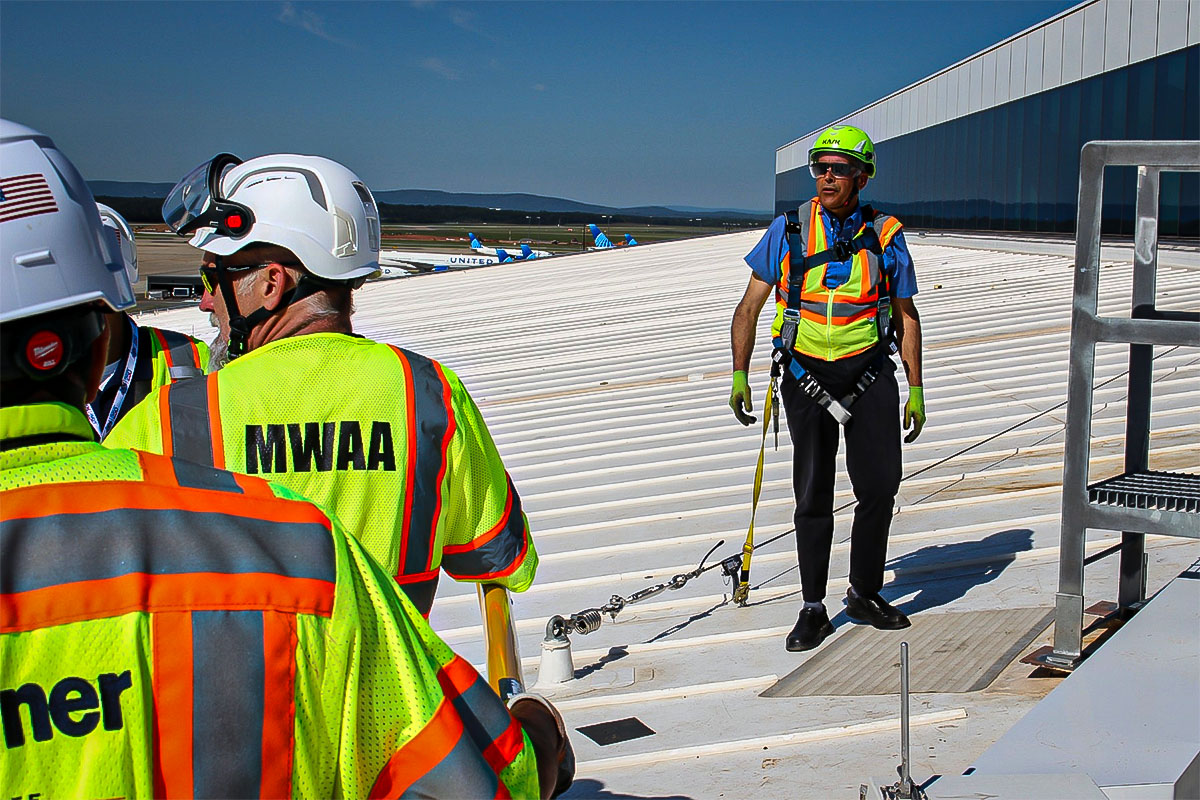
Following the classroom portion, Summit conducted hands-on training at the installed horizontal lifeline systems.
Maintenance personnel were shown how to identify system components, review labels and markings, perform pre-use inspections, recognize conditions that may require a system to be removed from service, properly connect to the horizontal lifeline, and travel while remaining connected.
The field training also incorporated Summit’s as-built drawings so personnel could relate the documented system configuration, approved applications, connection locations, and limitations to the equipment installed on the building.
Taking Fall Protection Beyond Installation
Permanent fall-protection equipment is only one part of providing safe access for building maintenance.
That is why Summit’s approach extends from design and engineering coordination through fabrication, installation, testing, certification, documentation, and owner training.
Bringing those elements together helps owners and maintenance personnel understand not only how a fall-protection system works, but how it is intended to be used and where its limitations apply.
For Summit, that final step matters. The people who use and maintain a fall-protection system should understand the equipment before they need to depend on it.
safety from the top down.
CONTACT US.
Whether your project is in Athens, Greece or Anchorage, Alaska, or all points in between, we are your full service fall protection provider.
Call Summit Anchor Company today to speak with one of our representatives.